
156 books
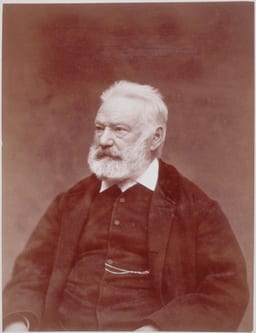
Victor Hugo (1802–1885) was a French novelist, poet, and dramatist who joined large social conflicts to questions of dignity, justice, and freedom. His work across fiction, poetry, theater, and political life gives public conscience an unusually expansive literary form. Les Misérables follows Jean Valjean through poverty, exclusion, law, mercy, and moral transformation while opening outward into a crowded social panorama. Notre-Dame de Paris, also known as The Hunchback of Notre Dame, makes medieval Paris and its cathedral active forces in the characters’ destinies. The Man Who Laughs examines social spectacle and exclusion through a protagonist marked by a permanent grin. Les Misérables offers the broadest canvas; Notre-Dame de Paris suits readers drawn to architecture and historical atmosphere, while The Man Who Laughs turns bodily difference into public judgment. Hugo’s emotional scale remains tied to an ethical demand on society.

Victor Hugo

Victor Hugo

Victor Hugo

Victor Hugo

Victor Hugo

Victor Hugo

Victor Hugo

Victor Hugo

Victor Hugo

Victor Hugo

Victor Hugo

Victor Hugo

Victor Hugo

Victor Hugo

Victor Hugo

Victor Hugo

Victor Hugo

Victor Hugo

Victor Hugo

Victor Hugo

Victor Hugo

Victor Hugo

Victor Hugo

Victor Hugo

Victor Hugo

Victor Hugo

Victor Hugo

Victor Hugo

Victor Hugo

Victor Hugo

Victor Hugo

Victor Hugo

Victor Hugo

Victor Hugo

Victor Hugo

Victor Hugo

Victor Hugo

Victor Hugo

Victor Hugo

Victor Hugo

Victor Hugo

Victor Hugo

Victor Hugo

Victor Hugo

Victor Hugo

Victor Hugo

Victor Hugo

Victor Hugo

Victor Hugo

Victor Hugo

Victor Hugo

Victor Hugo

Victor Hugo

Victor Hugo

Victor Hugo

Victor Hugo

Victor Hugo

Victor Hugo

Victor Hugo

Victor Hugo

Victor Hugo

Victor Hugo

Victor Hugo

Victor Hugo

Victor Hugo

Victor Hugo

Victor Hugo

Victor Hugo

Victor Hugo

Victor Hugo

Victor Hugo

Victor Hugo

Victor Hugo

Victor Hugo

Victor Hugo

Victor Hugo

Victor Hugo

Victor Hugo
![The Slave-king From The Bug-jargal Of Victor Hugo [also Saint Domingo]](/_next/image?url=https%3A%2F%2Faizona-bookspace-covers-878992432200-eu-central-1.s3.eu-central-1.amazonaws.com%2Fcover%2F9781021532787.jpg%3Fv%3D907x1360s932&w=384&q=82)
Victor Hugo

Victor Hugo

Victor Hugo

Victor Hugo

Victor Hugo

Victor Hugo

Victor Hugo

Victor Hugo

Victor Hugo

Victor Hugo

Victor Hugo

Victor Hugo

Victor Hugo

Victor Hugo

Victor Hugo

Victor Hugo

Victor Hugo

Victor Hugo

Victor Hugo

Victor Hugo

Victor Hugo

Victor Hugo

Victor Hugo

Victor Hugo

Victor Hugo

Victor Hugo

Victor Hugo

Victor Hugo

Victor Hugo

Victor Hugo

Victor Hugo

Victor Hugo

Victor Hugo

Victor Hugo

Victor Hugo

Victor Hugo

Victor Hugo

Victor Hugo

Victor Hugo

Victor Hugo

Victor Hugo

Victor Hugo

Victor Hugo

Victor Hugo

Victor Hugo

Victor Hugo

Victor Hugo

Victor Hugo

Victor Hugo

Victor Hugo

Victor Hugo

Victor Hugo

Victor Hugo

Victor Hugo

Victor Hugo

Victor Hugo

Victor Hugo

Victor Hugo
Victor Hugo
Victor Hugo
Victor Hugo
Victor Hugo
Victor Hugo
Victor Hugo
Victor Hugo
Victor Hugo
Victor Hugo
Victor Hugo
Victor Hugo
Victor Hugo
Victor Hugo
Victor Hugo
Victor Hugo
Victor Hugo
Victor Hugo
Victor Hugo
Victor Hugo
Victor Hugo


